
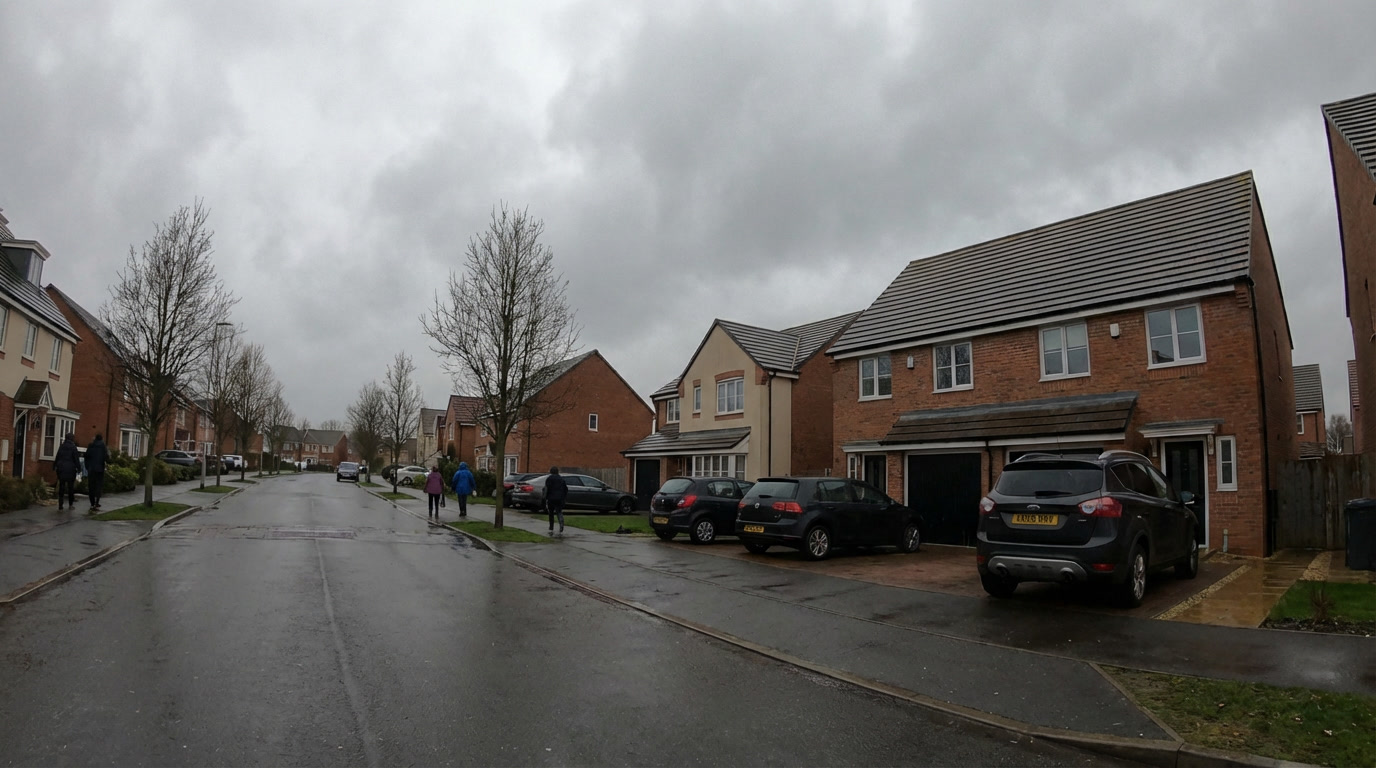
Motorists have been quietly handed one of the most practical cost-of-living wins in years — and many still haven’t clocked it. A small change to planning rules, brought in last summer, has removed a stubborn bit of red tape around home EV chargers. The result? Officials say drivers could save up to £1,100 a year, simply by charging at home instead of filling up with petrol or diesel.
It’s not flashy policy. No ribbon-cutting. No viral announcement. But for households weighing up whether an electric car actually makes financial sense, this tweak could be the nudge that finally tips the scales.
What actually changed with the new driveway rule

Until last year, installing an electric vehicle charger on your own driveway wasn’t as straightforward as it sounds. Many homeowners had to apply for householder planning permission, adding weeks or months of paperwork, fees, and uncertainty to what should be a simple electrical upgrade.
That requirement has now been scrapped.
Under the updated rules, homeowners no longer need planning permission to install:
- A single wall-mounted EV charger, or
- A single pedestal charger on their driveway

As long as the installation meets a few basic conditions, it falls under permitted development. In plain English: if you own your home and have a driveway, you can usually get an EV charger fitted without asking the council first.
Ministers say the aim is simple — remove friction, speed things up, and make switching to electric feel less like a bureaucratic obstacle course.
Where the £1,100 saving comes from
The headline figure has grabbed attention, and it’s not plucked from thin air. According to government estimates, charging an electric car at home — especially on off-peak tariffs — can be dramatically cheaper than running a petrol or diesel equivalent.

The savings stack up through:
- Lower electricity costs versus fuel prices
- Reduced maintenance (fewer moving parts, no oil changes)
- Greater access to cheap overnight charging
For a typical driver covering average annual mileage, officials estimate savings of up to £1,100 per year compared with internal combustion vehicles. That’s not a guarantee for everyone, but for many households, it’s realistic.
And crucially, those savings only really unlock if home charging is easy. Public chargers are improving, but they’re still more expensive and less convenient than plugging in at your own place.
Industry reaction: “This will make a real difference”
The charging industry has been pushing for changes like this for years, arguing that slow planning processes were quietly holding back EV adoption.
Lewis Gardiner, operations director at Osprey Charging Network, welcomed the move when it was confirmed.
“This is a hugely welcome and practical change that will make a real difference on the ground,” he said. “Removing the need for planning permission for essential electrical infrastructure will save months of delays, reduce costs and accelerate the delivery of the rapid charging hubs drivers need.”
Behind the scenes, this reform followed months of back-and-forth between government and industry players, all trying to remove bottlenecks without opening the door to planning chaos.
The rules you still need to follow
This isn’t a free-for-all. The permitted development rules come with guardrails, and installers are expected to stick to them.
To qualify:
- The charger must be no larger than 0.2 cubic metres
- It must be installed at least two metres from the public highway
That’s designed to avoid pavement clutter, safety issues, and visual disputes — the kinds of things that usually trigger neighbour complaints and council enforcement.
If your installation falls outside those limits, planning permission may still be required.
Where homeowners could still hit problems
Even with planning permission removed, not everyone has a green light.
People living in leasehold properties may still need approval from the freeholder. Many leases restrict changes to the exterior of a building, and EV chargers often fall into that category.
Some new-build estates also include restrictive covenants in title deeds, limiting alterations to façades or shared spaces. These rules can quietly block charger installations unless developers or management companies agree.
Then there’s the classic British complication: shared driveways. If you share access with a neighbour, installing a charger could spark disputes over cables, access rights, or usage — and that can quickly turn into a legal headache.
In other words, planning rules may be gone, but property law still matters.
Why this matters for the EV transition
The UK now has around 1.75 million fully electric cars on the road, and demand is still climbing. Data from the Society of Motor Manufacturers and Traders (SMMT) shows around 47,000 new electric cars sold in 2025, an increase of 8% compared with 2024.
Yet surveys consistently show the same hesitation among drivers: charging anxiety, cost concerns, and installation hassle.
This rule change directly targets one of those pain points. If charging at home becomes as normal as installing a smart meter, electric cars stop feeling like a leap of faith and start looking like a sensible household upgrade.
It’s not about forcing anyone to go electric. It’s about making the cheaper, cleaner option easier to choose.
The quiet policy shift with loud consequences
This is the kind of reform that rarely dominates headlines but reshapes behaviour over time. Fewer forms. Fewer delays. Fewer reasons to say “maybe next year”.
For motorists already eyeing an EV, the message is clear: the barriers are coming down, and the maths is starting to work in your favour.
Sometimes, the biggest changes don’t arrive with a bang. They show up as one less form to fill in — and £1,100 still sitting in your bank account at the end of the year.
FAQs:
Do I really not need planning permission anymore?
If you’re installing a single wall-mounted or pedestal EV charger on your driveway and it meets size and distance rules, planning permission is no longer required.
Does this apply to flats and leasehold homes?
Not always. Leaseholders may still need permission from the freeholder or management company, regardless of planning rules.
How much could I realistically save by charging at home?
Government estimates suggest savings of up to £1,100 a year compared with petrol or diesel cars, depending on mileage, tariffs, and usage.