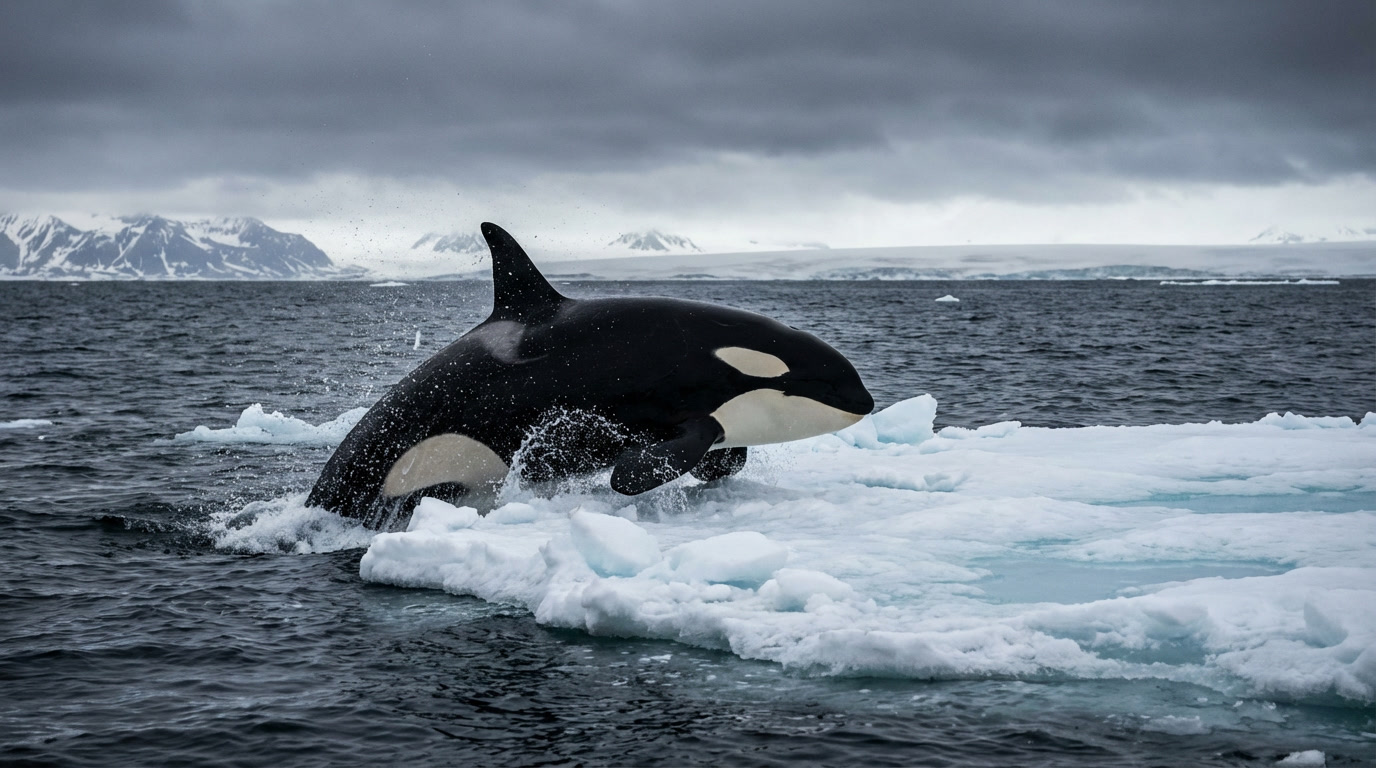
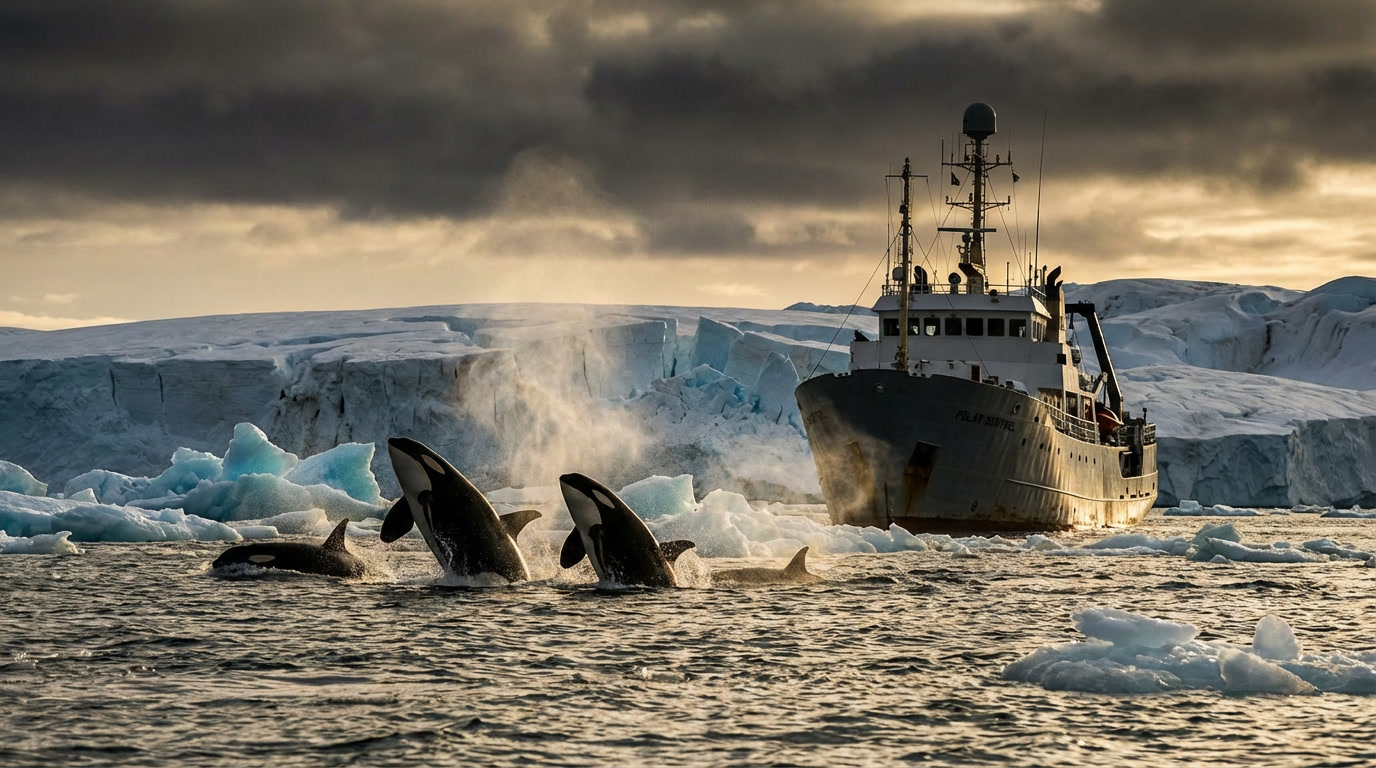
The first orca surfaced with a sound like a heavy door slamming shut beneath the water. On a small research boat off Greenland’s west coast, conversation died instantly. Breath turned to mist in the Arctic air as everyone stared at the black dorsal fin slicing through a sea littered with broken ice.
Far ahead, the ice shelf—white, ancient, and once unbroken—looked sick. Bruised. Veined with meltwater the color of weak tea. Then the radio crackled. A voice from the research station in Nuuk cut through the silence: “We’ve got more on the radar. Full pod. Closer to the shelf.”

No one said it, but everyone felt it.
This wasn’t just a beautiful wildlife moment. It felt like a warning.
Orcas at the Ice Edge Carry a Message We Can’t Ignore
Along parts of Greenland’s west coast, scientists are now watching orcas move confidently through waters that used to be locked under ice for much of the year. These aren’t confused animals wandering off course. They’re doing what orcas do best—following opportunity.

Read Also- Buried under 2 km of Antarctic ice, scientists discover a lost world 34 million years old
Black-and-white bodies glide between ice chunks. Dorsal fins rise where thick sea ice once blocked access. To the untrained eye, it’s stunning. To researchers who have spent decades measuring ice thickness and ocean temperatures, it’s unsettling.
In the past, orcas were rare near Greenland’s major ice shelves. Sea ice acted as a physical barrier, protecting narwhals and seals that hugged the frozen edges. But satellite data now shows shrinking ice cover and warmer Atlantic water pushing farther north, creating open corridors that simply didn’t exist before.
Field logs tell the same story. One research team recorded five separate orca pods in a single month near a melt-heavy stretch of coastline—numbers that would have sounded absurd just a generation ago.
The Science Behind Why Orcas Are Showing Up Now
This shift isn’t mysterious. It’s mechanical.
As sea ice retreats, it opens hunting pathways for top predators. Orcas, among the smartest hunters in the ocean, adapt quickly. Less ice means easier access to prey. Warmer water reshapes food webs from the bottom up. Everything moves.
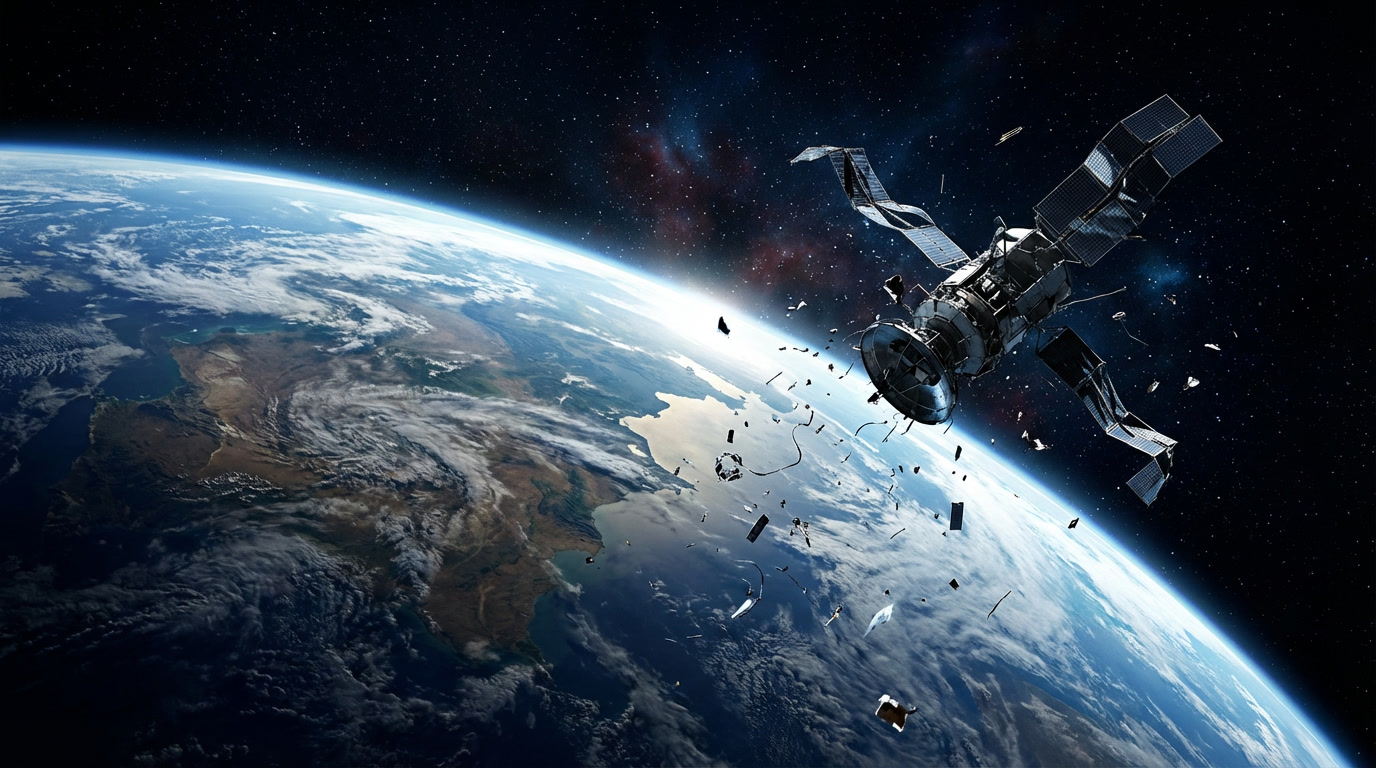
At the same time, instruments anchored beneath the ice are picking up record-warm water intrusions from the Atlantic. The ice is being attacked from both directions: solar heat above and warm currents below.
According to data from the National Snow and Ice Data Center (https://nsidc.org), Arctic sea ice extent has declined by roughly 13% per decade since satellite records began. The Greenland Ice Sheet, monitored by NASA (https://climate.nasa.gov), continues to lose hundreds of billions of tons of ice annually.
When Greenland’s authorities declared a localized environmental emergency after repeated orca sightings near vulnerable ice fronts, it wasn’t because orcas are dangerous.
It was because they are messengers.
The whales aren’t the crisis. They’re the blinking red indicator light.
What Greenland’s Emergency Response Actually Looks Like
An “emergency” doesn’t mean panic. It means acceleration.
Research vessels rerouted their missions to focus on the most fragile ice shelves. Every orca sighting is logged with GPS coordinates, water temperature, and ice conditions. Drones buzz overhead, mapping cracks and calving fronts where the ice has started to fail faster than expected.
Satellite teams in Denmark and Greenland are now sending near real-time imagery to field stations, tracking how the ice margin retreats day by day. This work builds on existing monitoring programs run through agencies like the Danish Meteorological Institute (https://www.dmi.dk) and the Government of Greenland (https://naalakkersuisut.gl).
Local knowledge matters too. Hunters and fishers report open water where thick ice once formed reliably. Orcas appearing in channels that elders remember as frozen highways.
Suddenly, centuries-old observation and modern climate science are speaking the same language.
When Wildlife Sightings Become Data Points
For scientists, orcas function like moving sensors.
Their presence near ice shelves tells a story about temperature, prey movement, and physical access. Orcas don’t force their way through thick ice. If they’re there, the ice barrier has weakened.
This intersection of biology and physics is exactly what worries climate experts. Ecosystems don’t shift in isolation. When top predators expand their range, it often means underlying systems have already changed dramatically.
As one marine ecologist working off west Greenland put it, seeing orcas near collapsing ice is “like finding tropical insects in a forest that used to freeze every winter.” The system has crossed a threshold.
How This Arctic Story Reaches Your Front Door
From far away, orcas near Greenland can feel like a distant headline. Beautiful. Strange. Easy to scroll past.
But the forces thinning those ice shelves are tightly linked to everyday life elsewhere—energy use, transportation, heating systems, and consumption patterns. Climate change doesn’t respect geography.
Melting Greenland ice contributes to sea-level rise, which influences coastal flooding from Florida to Bangladesh. Freshwater pouring into the North Atlantic can alter ocean circulation, affecting weather patterns across Europe and North America, according to research summarized by the Intergovernmental Panel on Climate Change (https://www.ipcc.ch).
This is why scientists keep returning to a handful of practical, near-term actions.
Reducing short-lived climate pollutants like methane and black carbon can slow ice loss faster than CO₂ cuts alone. These pollutants darken snow and ice, causing them to absorb more heat. Cutting them buys time—something Greenland is running out of.
That can look like cleaner heating fuels, slower shipping speeds in polar waters, better insulation, and policies that push renewables at the local level. None of it is cinematic. All of it matters.
The Emotional Gap Between Ice and Everyday Life
Here’s the hard part: humans aren’t wired for slow emergencies.
Bills, work, family, notifications—our attention spans are short. A glacier losing a few more centimeters of thickness doesn’t trigger the same alarm bells as a hurricane or a blackout.
So we delay. We procrastinate on climate the same way we procrastinate on dentist appointments and tax returns.
Greenland’s emergency declaration is a reminder that the climate system doesn’t wait for motivation. It moves on physics, not feelings.
A single choice—flying less often, eating less meat, backing local clean-energy policies—won’t “save the Arctic.” But it chips away at the same wall of emissions warming the ocean gnawing at that ice shelf.
Why the Orcas Matter More Than the Photo
Somewhere tonight, another dorsal fin will cut through dark Arctic water, closer to the ice front than it would have dared twenty years ago. A satellite will pass overhead, quietly collecting rows of numbers about ice thickness and temperature. A teenager in Nuuk might scroll past a video of that same pod, framed with music and flame emojis.
These layers stack together: ancient migration patterns, modern acceleration, fleeting attention.
The emergency Greenland declared isn’t about spectacle. It’s about acknowledgment. The rules of the Arctic are changing faster than the systems built around them.
The orcas are doing what they’ve always done—adapting, hunting, teaching their young. The question is whether we do the same.
Because in the end, the story isn’t really about whales swimming near melting ice.
It’s about what we choose to do while they do.
FAQs:
Are orcas new to Greenland’s waters?
No. They were once rare and seasonal. Reduced sea ice now allows them to reach areas previously blocked most of the year.
Why did Greenland declare an emergency over whale sightings?
The emergency reflects what the sightings signal—rapid ice loss and ecosystem disruption—not danger from the whales themselves.
Are orcas causing the ice to melt faster?
No. Orcas are responding to environmental change. Warming oceans and air temperatures are driving the melt.