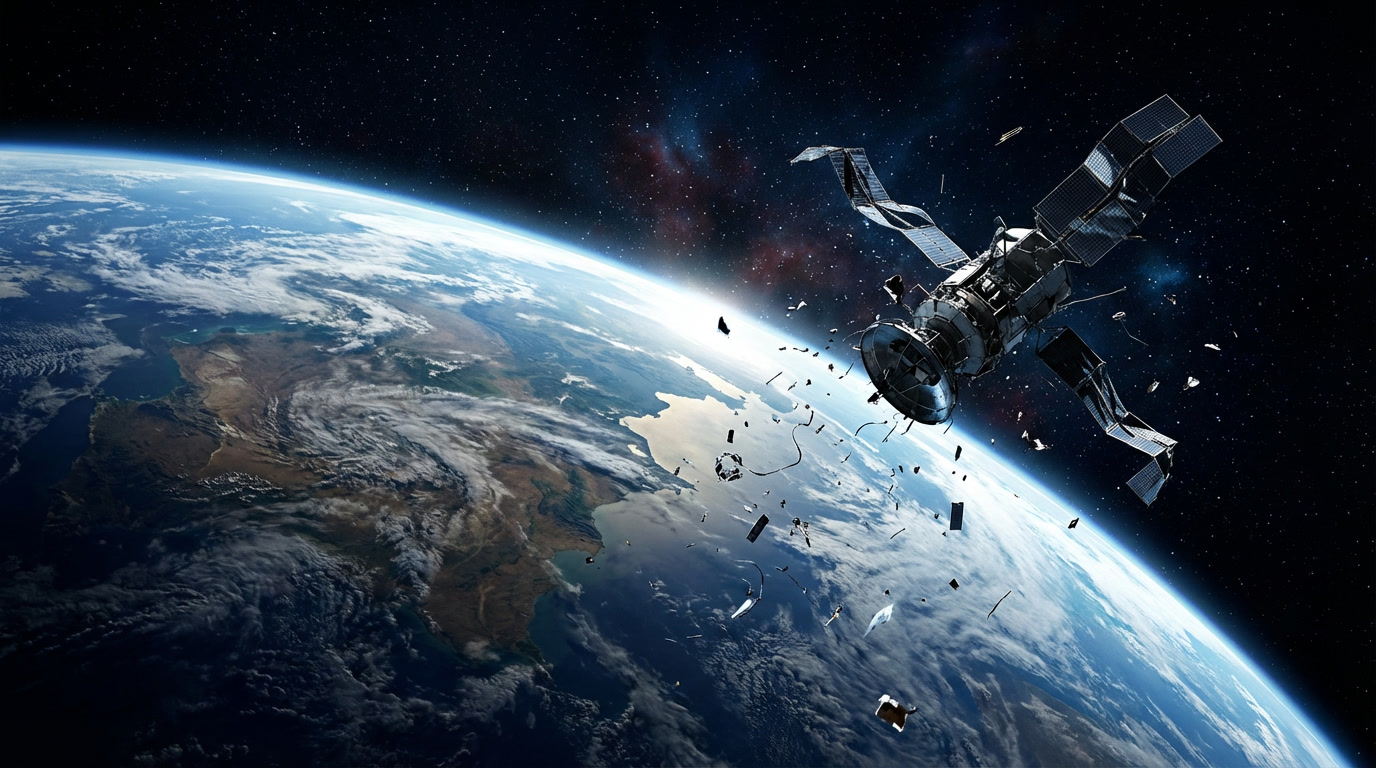
A routine rocket launch failure has quietly exposed a risk most airline passengers never think about—what’s happening above their aircraft. In a rare but serious move, the U.S. government has issued a safety alert to airlines worldwide, warning that space debris from exploding rockets is becoming a real aviation hazard. The trigger was dramatic: a SpaceX Starship rocket broke apart mid-flight, scattering thousands of debris fragments over the Caribbean—uncomfortably close to three aircraft already in the air.
No planes were hit. No injuries were reported. But regulators aren’t waiting for a near-miss to turn into a catastrophe.
Why the FAA is sounding the alarm now

The warning came from the Federal Aviation Administration (FAA), the agency responsible for keeping U.S. airspace safe. In a newly issued Safety Alert for Operators (SAFO), the FAA cautions airlines that rocket launches and reentries have surged, and with them, the risk of “catastrophic failure”—industry shorthand for a rocket exploding mid-flight.
When that happens, debris doesn’t politely fall into the ocean. It spreads unpredictably through airspace that commercial jets actively use.
The alert follows a recent incident involving SpaceX’s Starship, which disintegrated during a test flight. According to aviation authorities, debris fell close to two commercial flights and one private aircraft over the Caribbean. The situation was serious enough that it prompted immediate review across regulators and airlines.

As the FAA bluntly notes in its safety guidance, even small fragments traveling at high speed can cause severe damage to an aircraft.
What the FAA’s safety alert actually says
The FAA’s SAFO does not introduce new regulations—but it strongly urges airlines to adjust how they plan and operate flights near active space launch corridors.
One key concern: traditional aviation risk models were built for weather and traffic, not falling rocket debris.

The FAA emphasizes that pilots and dispatchers must now think in three dimensions. Hazards no longer come just from storms or other aircraft—but potentially from above.
Among the FAA’s recommendations:
- Closely monitor NOTAMs (official Notices to Air Missions) related to rocket launches and reentries via the FAA’s official NOTAM system
- Review airspace restriction plans tied to space activity
- Evaluate whether launch failures could intersect planned flight paths
- Prepare for reroutes, holding patterns, or cancellations at short notice
- Carry additional fuel to handle diversions or delays
- Pre-identify alternate airports if debris forces emergency landings
The FAA also highlights Debris Response Areas—temporary airspace zones activated when a space launch fails. Even then, the agency warns debris can fall outside designated areas.
In other words: risk containment isn’t perfect.
The incident that pushed this into the spotlight
The SpaceX Starship explosion didn’t damage any aircraft—but aviation officials aren’t treating it as luck worth repeating.
Starship is part of SpaceX’s next-generation launch system, designed to be fully reusable. Test flights are expected to fail occasionally. What’s new is how crowded the skies are becoming, both above Earth and within commercial flight corridors.
According to flight tracking and regulatory reviews, debris from the Starship breakup fell near active flight paths—forcing aviation authorities to reassess how spaceflight failures are managed in real time.
The FAA oversees commercial space launches through its Office of Commercial Space Transportation, detailed in its space operations oversight program.
Why space debris is becoming a bigger problem
The root issue isn’t one failed rocket. It’s scale.
Space launches are no longer rare national events. They’re routine commercial operations.
Here’s what FAA data shows:
| Year | FAA-Supervised Launches |
|---|---|
| 2015 | 14 |
| 2022 | 74 |
| 2023 | 113 |
| 2024 | 148 |
And the growth curve is steep.
The FAA projects 200–400 launches or reentries per year by 2034, with worst-case estimates reaching 566 annually, as outlined in FAA aviation forecasts published alongside U.S. airspace planning reports.
This includes launches from:
- SpaceX
- Blue Origin
- United Launch Alliance
- Future commercial operators not yet active
More launches mean more complex risk modeling—and more chances that something goes wrong.
Why pilots now have to look up, not just ahead
For decades, aviation safety focused on horizontal threats: weather systems, terrain, other aircraft.
Space debris changes that equation.
Rocket fragments can:
- Travel at extreme velocities
- Fall unpredictably due to atmospheric breakup
- Appear with little warning outside expected zones
That’s why the FAA explicitly warns pilots they can’t focus solely on the sides or below their aircraft anymore. Vertical risk awareness is now part of flight safety.
This marks a fundamental shift in how commercial aviation intersects with spaceflight—a convergence regulators admit they’re still learning to manage.
What this means for passengers
For travelers, this doesn’t mean rockets are about to rain down on flights. The probability remains low. But it does explain why you may see:
- Sudden reroutes
- Unexpected delays near launch windows
- Cancellations tied to “airspace restrictions”
These decisions are increasingly precautionary—and deliberate.
As commercial space activity accelerates, airlines are being asked to prioritize caution over convenience.
The unavoidable reality
Rocket technology continues to improve. Failures are less common than they once were—but they will never be eliminated entirely.
When rockets fail, debris doesn’t respect borders, flight levels, or schedules.
The FAA’s alert is a signal that aviation safety now extends beyond Earth’s atmosphere. The challenge ahead isn’t stopping space launches—it’s learning how to coexist with them safely.
The skies are getting busier. Not just with planes—but with what’s coming back down.
FAQs:
What prompted the FAA’s safety alert to airlines?
A SpaceX Starship rocket exploded during a test flight, scattering debris near multiple aircraft over the Caribbean.
Does the FAA’s alert create new rules for airlines?
No. It provides guidance and safety recommendations, not mandatory regulations.
What are Debris Response Areas?
Temporary airspace zones activated after a rocket failure to manage falling debris risk.