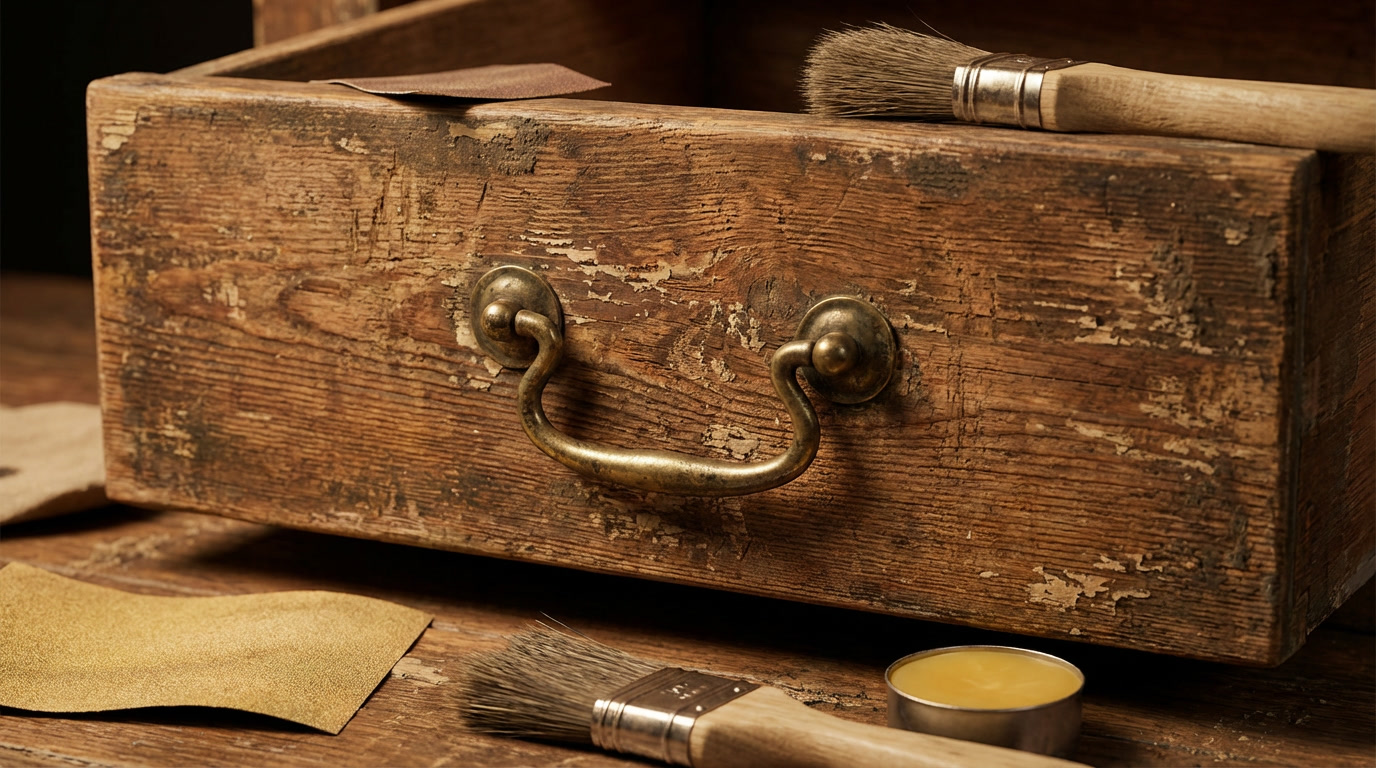
The afternoon light hit the old oak sideboard just right, and for the first time in years, Lena really saw it. Not as “that lovely antique from grandma,” but as what it had quietly become: a tired slab of wood dulled by fingerprints, cloudy polish, and rushed cleanings. The surface looked greyed over, almost foggy, like it had forgotten how to shine. When she ran her hand across the top, it dragged—sticky in places, oddly dry in others.
Her first instinct was panic. A quick phone search for “refinish antique wood” dumped her into a swamp of sanding, stripping chemicals, respirators, and weekends lost to dust. All she wanted was the warmth back, not a full-blown restoration project.

What she didn’t know then was that most tired-looking wooden furniture isn’t damaged at all. It’s just buried. And one quiet, almost boring method is often enough to bring it back.
Why wooden furniture slowly loses its glow
Furniture doesn’t go dull overnight. It happens in layers, so slowly you barely notice. Cooking vapors float through the house. Hands leave behind natural oils. Spray polishes add shine at first, then leave behind silicone and wax residue that never fully goes away. “Multi-surface” cleaners dry fast and streak even faster.
Over time, these layers build a film that suffocates the finish. From across the room, the table looks fine. Up close, it’s cloudy, patchy, sometimes even tacky to the touch. That sticky feeling isn’t “nourished wood.” It’s grime holding onto dust like glue.

A furniture restorer named Marc, who works out of a small workshop behind a Paris courtyard, sees this weekly. Clients come in convinced their dresser or table is ruined forever. The finish looks chalky. Rings bloom under glasses. The surface has that greasy-dull shine no amount of buffing seems to fix.
Marc almost never sands first. He doesn’t strip unless the finish is actually failing. Instead, he starts by removing what doesn’t belong there.
“Most pieces aren’t dying,” he says. “They’re just suffocating.”
The simple method restorers quietly rely on

Here’s the part people don’t expect. The fix often starts with two things: a good microfiber cloth and a very mild cleaning solution.
Not a rag. Not paper towels. A dense, tight-weave microfiber—the kind used for eyeglasses or car detailing. This matters because microfiber lifts and traps grime instead of pushing it around.
The solution is almost disappointingly simple: lukewarm water, a drop or two of mild dish soap, and a small splash of white vinegar. Not foamy. Not sharp-smelling. Just slightly cloudy.
Lightly dampen the cloth. Not wet. Not dripping. Fold it into a flat pad and work in small sections, following the grain, with gentle overlapping motions. Think coaxing, not scrubbing.
The first pass usually pulls up a faint brown-grey film. That’s years of buildup coming off. Refold the cloth to a clean section, wipe again, then lightly dry the area with a second microfiber.
That’s when the change starts to show. The color deepens. The grain sharpens. Light reflects softly instead of bouncing off a dull haze.
People often try this on one corner, expecting nothing. Then they step back and realize half the table looks warmer, richer—almost younger—than the other half. What they thought was damage was mostly residue.
Why this works (and harsh cleaners don’t)
The chemistry is gentle but effective. The soap emulsifies grease from hands and kitchens. The vinegar helps break down the cloudy film left by old polishes. Because the cloth is only slightly damp, you’re not soaking the wood or swelling veneer. You’re lifting dirt, not flooding the finish.
Harsh cleaners “work” fast because they’re too aggressive. Ammonia, degreasers, and bleach can haze or strip finishes in seconds. They remove the problem by removing everything else too.
This method takes longer—twenty calm minutes instead of five frantic ones—but it keeps the finish intact. Small scratches blend better once the surrounding grime is gone. Even light water rings often soften when the surface is clean and even again.
The key is patience. Multiple light passes beat one hard scrub every time.
The mistakes that cause real damage
Most furniture damage happens during rushed cleaning, not daily use.
Over-wetting is the big one. People soak the cloth, thinking more liquid equals more clean. What they get instead are darkened veneer edges, raised grain, or cloudy patches that never quite dry right.
The second mistake is product hopping. When one spray doesn’t work instantly, another gets layered on top. Over time, those products react with each other, creating the very haze people are trying to fix.
Professionals work differently. They start mild. Test gently. Build only if needed. If a stubborn patch remains after several careful passes, they might use a specialized wood cleaner or a tiny amount of odorless mineral spirits—but always sparingly, always with a clean cloth.
As Marc puts it, “Control beats force. Every time.”
Turning cleaning into quiet restoration
Something unexpected happens when you slow down and work this way. The job stops feeling like cleaning and starts feeling like restoration. You notice where hands rested for decades. Small dents tell stories. Sunlight has lightened one edge more than the other.
Many people say once they revive one piece, they start noticing others. A stair banister gone grey from touch. A bedside table dulled by years of wiping. Each one comes back a little, without losing its age.
That’s the beauty of it. You’re not making furniture new. You’re letting it breathe again.
Optional finish: less is more
After cleaning and drying, many restorers like to finish with a very thin coat of quality paste wax. Not spray polish. Not silicone shine. Just a soft wax, applied sparingly and buffed gently.
It adds a quiet sheen and a bit of protection, without creating future buildup. And when it wears off, it fades gracefully instead of turning sticky.
Key takeaways
| Insight | What it means | Why it helps |
|---|---|---|
| Gentle beats aggressive | Mild soap, vinegar, microfiber | Protects the original finish |
| Moisture control matters | Slightly damp cloth only | Prevents swelling and stains |
| Buildup mimics damage | Most dullness is residue | Saves refinishing costs |
| Patience pays off | Multiple light passes | Better results, less risk |
FAQs:
Can I use this method on all wooden furniture?
It’s safe for most sealed finishes like varnish, lacquer, and polyurethane. For very old, flaking, or oil-only finishes, test a hidden spot first and stay extra gentle.
How often should furniture be cleaned this way?
A few times a year is enough. For regular upkeep, dry dusting with microfiber works well.
Will this remove water rings completely?
Light surface rings often fade once grime is removed. Deep white or dark rings inside the finish may need professional treatment.