On a damp Tuesday evening in a cramped city apartment, Carla wasn’t chasing a viral cleaning hack. She was just tired. Tired of the sour smell creeping out from behind her sink. Tired of scrubbing with expensive sprays that promised miracles and delivered disappointment. So she reached for what she had: a battered orange box of baking soda and a brown pharmacy bottle of hydrogen peroxide.
When she mixed them, the paste fizzed softly, almost alive. Ten minutes later, the black mold ring that had been mocking her for weeks wiped away with barely any effort. Carla stared at the sink, then laughed. It felt like she’d uncovered a secret she wasn’t supposed to know.

She hadn’t. Millions of people are quietly rediscovering it.
Why this simple combo works so well
Baking soda and hydrogen peroxide don’t look impressive on a supermarket shelf. No neon labels. No “power action” slogans. But chemically, they punch far above their weight.
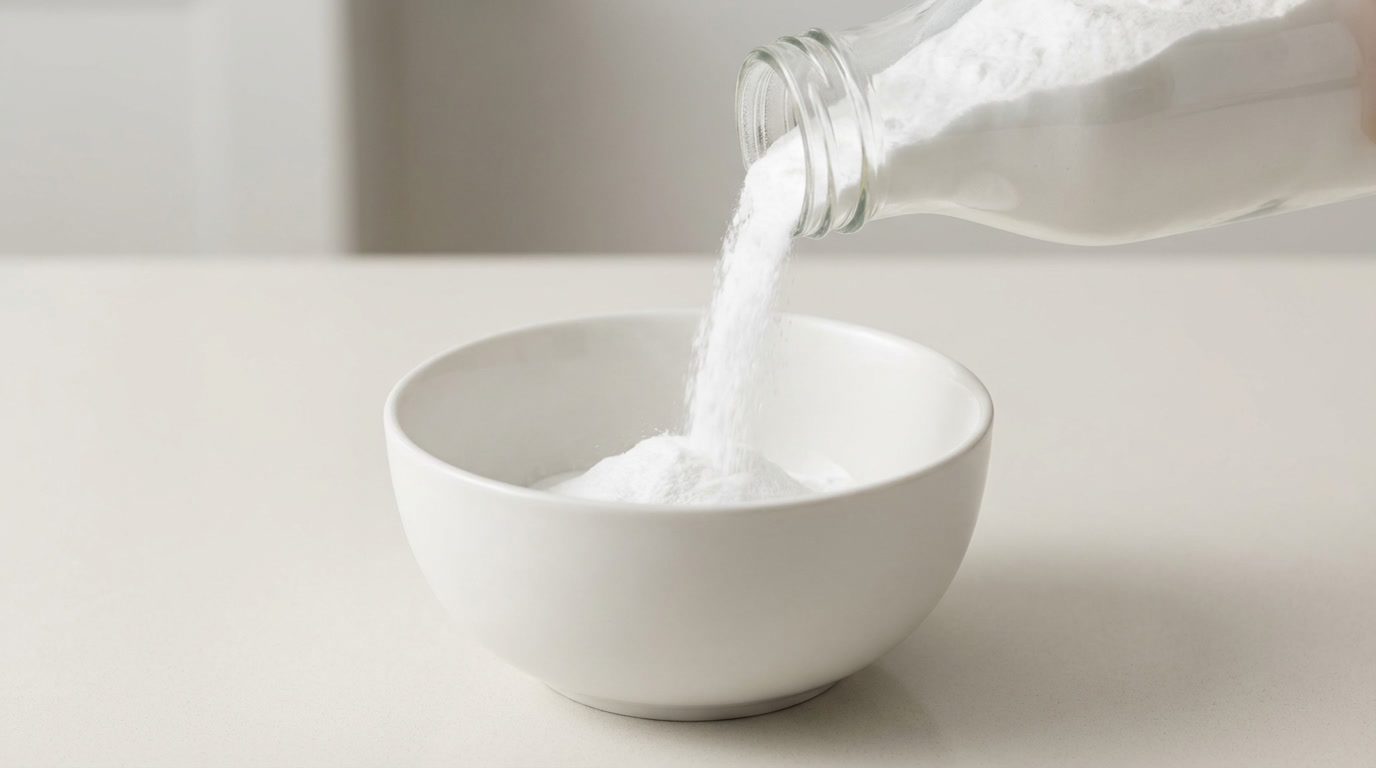
Baking soda (sodium bicarbonate) is mildly abrasive and alkaline. That means it can loosen grease, neutralize odors, and gently scrub without gouging surfaces. Hydrogen peroxide, usually sold in a 3% solution for home use, is an oxidizer. It breaks down into water and oxygen, releasing tiny bubbles that lift organic stains and attack bacteria, mold, and mildew.

When combined, you get a paste that sticks where sprays drip, bubbles where grime hides, and works without filling your bathroom with choking fumes. It’s the same basic chemistry behind many professional cleaners — just without the perfume and harsh additives.
Cleaning chemists often describe it bluntly: this is low-tech chemistry doing high-impact work.
Where it shines in real homes
People tend to discover this mixture by accident, then start using it everywhere.

Grout lines are the gateway drug. Two parts baking soda to one part hydrogen peroxide makes a thick paste that can be pressed into stained grout. After 5–10 minutes, a light scrub and rinse reveal lines that look years younger. No bleach smell. No burning eyes.
In kitchens, the paste works on yellowed cutting boards, stained sinks, and grimy oven doors. On baking sheets that look permanently ruined, repeated treatments can lift layers of baked-on residue enough to make them presentable again. Not showroom-new, but respectable — and that’s often enough.
Laundry stains are another quiet win. Sweat marks, blood, food spills, and mattress halos often respond well because they’re organic. Dab the paste on, let it bubble, rinse, then wash as usual. It doesn’t save every fabric, but when it works, it saves real money.
Even dentists admit — quietly — that a diluted version helps lift surface stains on teeth. Used sparingly, it can brighten enamel, though they’re quick to warn against overuse.
This isn’t magic. It’s just understanding what kind of dirt you’re fighting.
Where it doesn’t belong
Here’s where social media gets people into trouble.
Hydrogen peroxide can bleach color. Baking soda can scratch delicate finishes. Together, they’re not universal.
Natural stone like marble or granite can dull over time. Unfinished wood can discolor. Dark fabrics can lighten unpredictably. Antique metals can react badly. That’s why professionals repeat the same boring advice: test a small, hidden spot first.
And never mix this combo with vinegar or bleach. Peroxide plus vinegar can form peracetic acid, which irritates lungs and eyes. Any oxidizer plus bleach risks toxic gas. This isn’t “overcautious” talk — it’s basic chemical safety.
Stick to simple rules, and the mixture stays friendly.
How professionals actually use it
The biggest mistake people make is treating it like a spray-and-wipe cleaner. It’s not. It needs contact time.
Experts suggest:
- Mix only what you need, right before use
- Aim for a thick, spreadable paste
- Apply directly to the stain or surface
- Wait 5–10 minutes
- Scrub gently
- Rinse thoroughly
That waiting period matters. The fizz you see is oxygen being released, working its way into pores and cracks. Once it stops bubbling, the reaction is largely done.
Don’t store mixed batches. Once the fizz fades, the power does too.
And yes, wear gloves if you’re scrubbing a lot. Alkaline paste plus friction can dry out skin faster than you expect.
Why people keep switching back to it
After the first success, something shifts. People stop buying five different bottles for five different problems. The cleaning cupboard gets lighter. The air smells neutral instead of aggressively floral.
There’s also a strange psychological effect. Mixing the paste feels intentional. You’re not blindly spraying and hoping. You’re watching cause and effect. You learn what works in your home, with your water and your messes.
That sense of control matters. Especially in homes that feel like they’re constantly degrading — grout darkening, fabrics staining, surfaces aging faster than you can keep up.
This simple duo doesn’t promise perfection. It promises usefulness. And that’s why it sticks.
FAQs:
Can I use baking soda and hydrogen peroxide to whiten my teeth safely?
Yes, but cautiously. Use only 3% hydrogen peroxide, mix a small amount with baking soda to form a thin paste, and use it no more than once or twice a week. Brush gently, don’t swallow, and stop if you notice sensitivity. Dentists warn that overuse can irritate gums and gradually wear down enamel, especially if you scrub too hard
Is this mixture safe for all types of grout?
Mostly, yes — especially for ceramic tile with sealed grout. However, very old, crumbling, or unsealed grout can be fragile. Always test a small, hidden section first, use a soft brush rather than stiff wire bristles, and avoid aggressive scrubbing if the grout already shows cracks or erosion.
Can I pour baking soda and hydrogen peroxide down drains to clean and deodorize them?
It can help with light odors and organic buildup, but it’s not a miracle drain opener. The fizz can loosen mild grime and neutralize smells, especially in bathroom sinks. For best results, rinse with warm water afterward. Avoid using it as a replacement for proper drain maintenance or for clearing serious clogs.