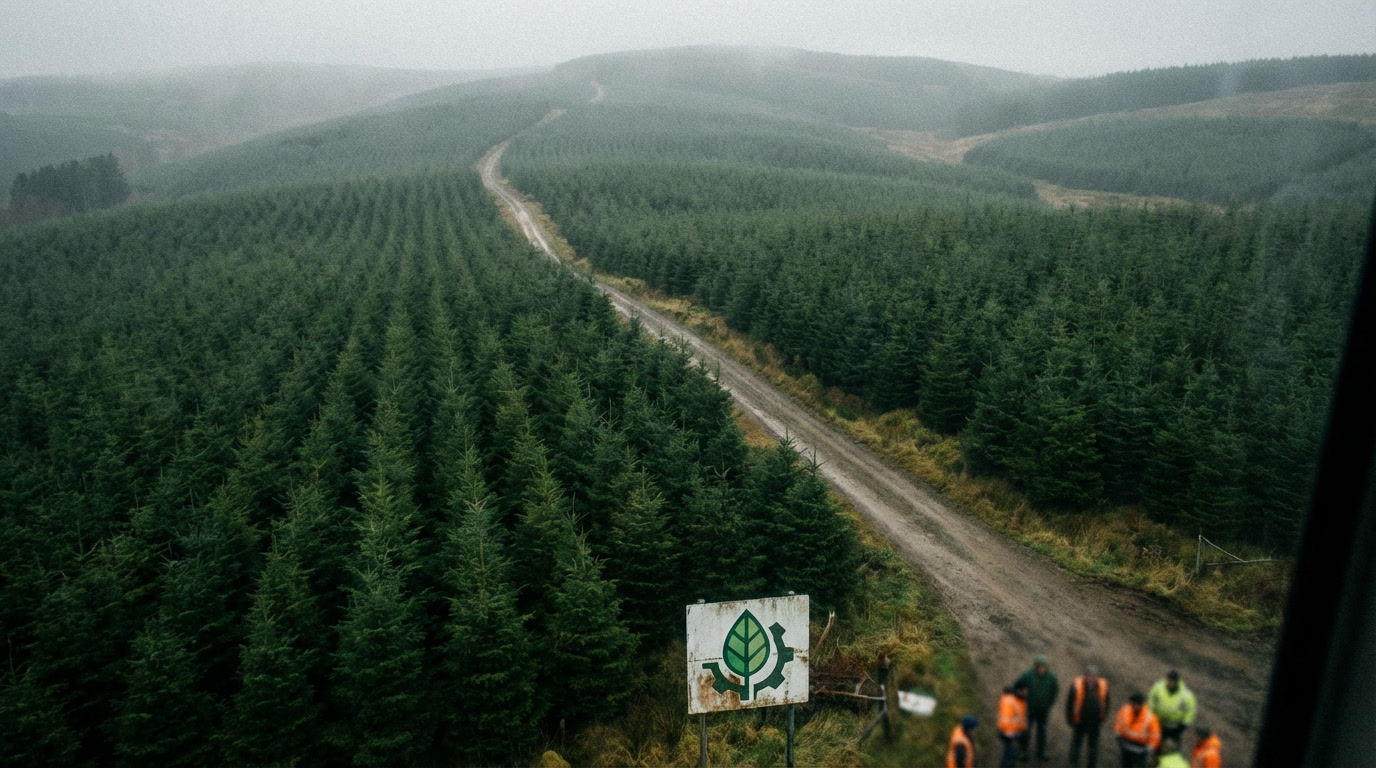
On the edge of Inner Mongolia, the wind still bites. It scrapes skin raw, rattles loose doors, and carries a faint taste of coal dust. Older residents remember when spring meant days of yellow skies, when sandstorms rolled in like weather fronts and swallowed villages whole. Today, the storms are quieter. And scattered across what was once bare land, something unexpected has taken root: trees. Not forests in the romantic sense, but long, deliberate rows of green pushing back against the dust.
China has planted more trees than any country in modern history. From space, the transformation looks dramatic, almost miraculous. On the ground, it’s more complicated — a story of real gains, costly mistakes, and a national experiment still very much in progress.
The Green Wall That Changed the Map

China’s massive reforestation drive, often called the “Great Green Wall,” stretches thousands of kilometers across the country’s north. It’s part of the Three-North Shelterbelt Program, launched in the late 1970s to stop deserts from advancing toward major cities and farmland.
The logic was straightforward. Trees slow the wind. Roots hold soil. Leaves trap dust. And for a country battered by decades of deforestation and overgrazing, the idea of planting its way out of environmental crisis had strong appeal.
By the 1980s, China was facing more than 20 major dust storms a year. Beijing regularly disappeared behind curtains of sand. Crops failed. Roads closed. Planting trees became both an environmental mission and a political one.

According to satellite data analyzed by NASA and published in Nature Sustainability, China accounted for roughly one-quarter of the global increase in leaf area since the early 2000s. In plain terms: when the planet got greener, China did more than its share of the work.
In regions like Shaanxi, Ningxia, and Hebei, vegetation coverage rose sharply. Dust storms declined. Farmers reported fewer days when the air was unbreathable. On paper — and from orbit — it worked.
Why Trees Worked — At Least at First
Trees do a lot of quiet work. They anchor soil, reduce erosion, and help rain soak in instead of washing away. In river basins, they slow runoff and reduce flooding. In drylands, they roughen the surface just enough to break the force of wind.

They also store carbon, locking it away in trunks and roots. While China remains the world’s largest emitter of greenhouse gases, its forests have become an important carbon sink — a partial counterweight to coal-fired power plants.
For local communities, the benefits were immediate. Fewer sandstorms meant healthier crops and fewer respiratory illnesses. Kids in northern cities today barely remember the yellow skies their grandparents still talk about.
But this success came with a catch.
When Tree-Planting Goes Sideways
Not all trees belong everywhere. And China learned that lesson the hard way.
In the 1990s and early 2000s, large-scale planting campaigns favored fast-growing, single-species plantations, especially poplars. They were cheap, quick to plant, and looked impressive fast. From an administrative standpoint, they were perfect.
From an ecological one? Not so much.
In arid areas like the Loess Plateau and parts of Inner Mongolia, these water-hungry trees struggled. Rainfall in some zones barely reaches 300 millimeters a year. Poplars grew rapidly at first, then began to fail. Leaves thinned. Trunks cracked. Entire stands died within a decade.
Worse, the plantations drew heavily on groundwater. Villagers reported falling well levels. Springs slowed or vanished. In some cases, new forests protected soil from wind but quietly drained the land beneath.
The problem wasn’t trees themselves — it was how they were planted.
The Risk of Chasing Green Numbers
China’s system rewarded scale. Millions of saplings planted. Thousands of hectares “greened.” Survival rates mattered less than completion targets.
That incentive structure encouraged monocultures and dense planting, even where ecosystems historically supported grasslands and shrubs, not forests. From the air, success and failure looked identical for years. Only later did the weaknesses show.
Scientists warned that plantations where trees age together can also fail together — from pests, drought, or disease. Unlike natural forests, they lack diversity and resilience.
It’s a reminder that planting trees is easy. Growing forests is hard.
A Shift Toward Restoration, Not Just Planting
In recent years, China’s forestry strategy has begun to change.
New projects increasingly emphasize:
- Native, drought-tolerant species
- Mixed planting instead of monocultures
- Lower tree density to reduce water stress
- Restoration of grasses and shrubs alongside trees
In places like Gansu and Xinjiang, officials are thinning stressed plantations and allowing land to recover naturally. The approach is slower and less photogenic. There are fewer ribbon-cuttings, fewer neat rows for cameras.
But it’s more sustainable.
Local knowledge is also playing a bigger role. Herders are hired as forest stewards, paid to monitor tree health and prevent illegal logging. Older residents point out which plants survived past droughts. Scientists talk about “assisted natural regeneration” — helping ecosystems heal instead of forcing them into uniform shapes.
As one ecologist working between Beijing and the field put it:
“Trees don’t save landscapes by themselves. Soil, water, and people do.”
What China’s Experiment Teaches the World
China has run the largest reforestation experiment in human history. And like most experiments done at scale, the results are mixed.
What Worked
- Dust storms declined in many northern regions
- Vegetation cover expanded dramatically
- Carbon storage increased
- Political will turned environmental goals into action
What Didn’t
- Monocultures proved fragile
- Water resources were strained in dry regions
- Biodiversity was often ignored
- Short-term targets encouraged shortcuts
For countries planning massive tree-planting drives — from Africa’s Sahel to parts of South America — China’s experience is a warning and a guide.
Planting billions of trees can change landscapes. But without attention to water, species diversity, and long-term care, those gains can unravel.
Key Takeaways at a Glance
| Issue | What China Showed | Why It Matters |
|---|---|---|
| Dust control | Tree belts reduce wind erosion | Proven local benefits |
| Carbon storage | Forests absorb significant CO₂ | Helps climate goals |
| Monocultures | Fast gains, fragile outcomes | Risk of mass failure |
| Water use | Wrong species drain aquifers | Limits where forests belong |
| Restoration shift | Mixed, native planting works better | Model for future projects |
FAQs:
Is China really planting more trees than any other country?
Yes. Satellite data shows China has added more new forest cover than any other nation over the past two decades.
Have dust storms actually decreased?
Yes, especially in northern China, though climate patterns outside China also affect storm intensity.
Why did some forests fail?
Poor species choice, dense monocultures, drought, pests, and groundwater depletion.