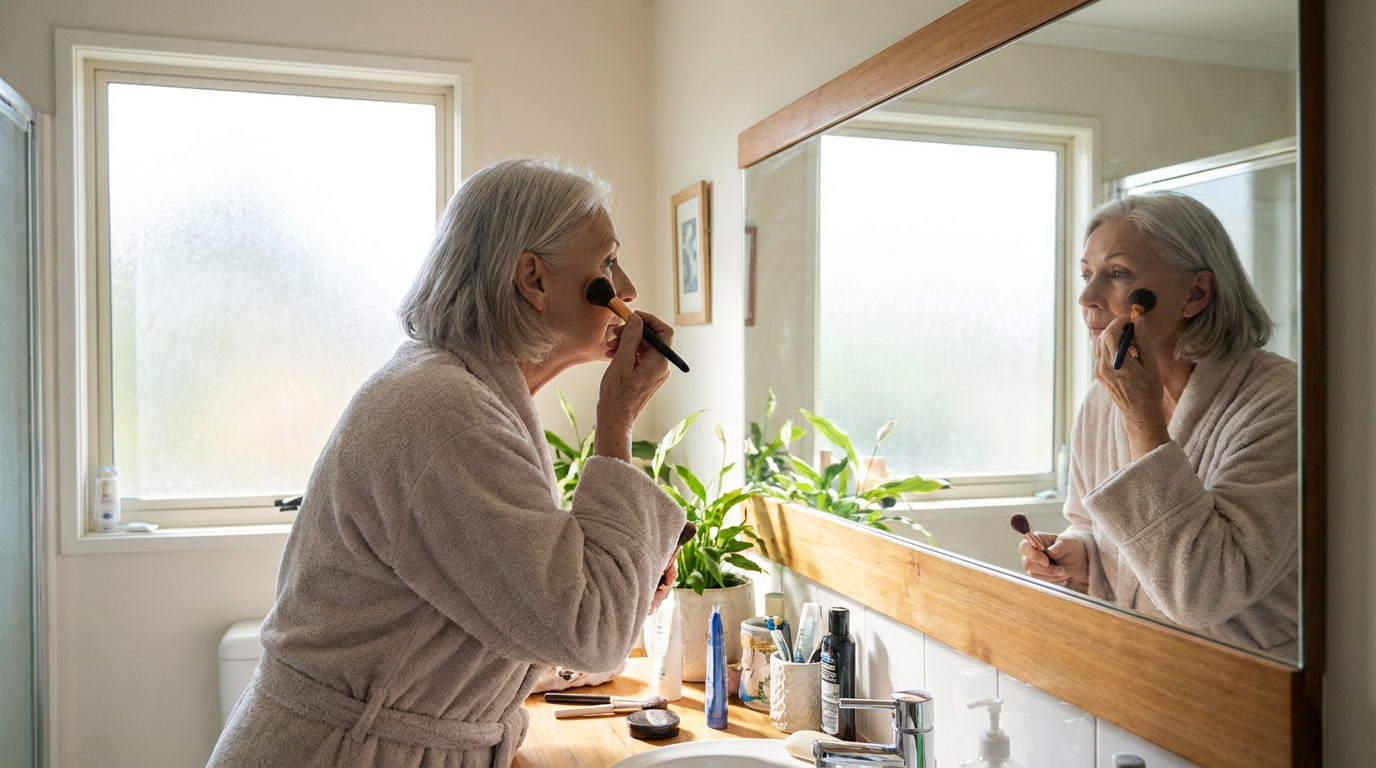
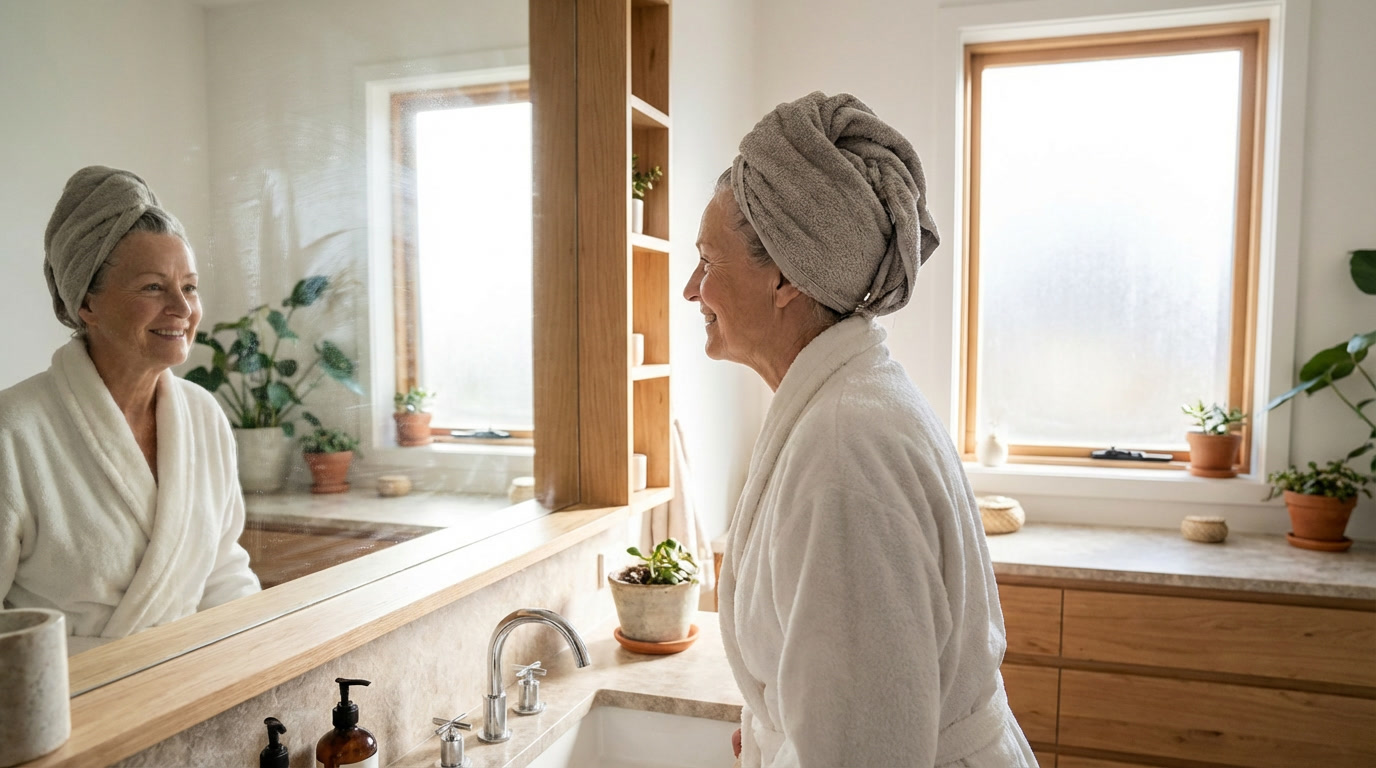
The coffee is still too hot to drink, the TV hums with afternoon news, and two women in their seventies lean closer at a cafeteria table. They’re not whispering about politics or pensions. They’re debating showers. “Every day? At our age?” one laughs. “My skin would peel off.” A caregiver nearby shakes her head later: “They wash like they’re 40. Their skin just can’t keep up anymore.”
No one ever gave us a rulebook for hygiene after 65. The body changes. The habits don’t. And somewhere between “fresh every morning” and “once a week is enough,” confusion sets in.
After 65, the body quietly rewrites the bathroom rules
At 30, a long, hot shower feels like a reset button. At 70, the same routine can leave your legs itchy, your back tight, your skin flaky by evening. This isn’t imagination or “just old age.” It’s biology doing its slow, unglamorous work.

As we age, the skin’s protective barrier thins. Oil (sebum) production drops, circulation slows, and the skin loses some of its ability to bounce back after stress. Dermatologists working with older adults see it daily: arms that look permanently chapped, itchy backs that interrupt sleep, shins that crack in winter no matter how much lotion is applied. Yet many patients insist they’ve “always showered like this.”
A European survey on aging skin found that more than 40% of seniors complained of daily dryness or itching, while most reported no change in bathing habits. The routine stayed frozen in time; the body moved on.

Here’s the uncomfortable paradox: after 65, showering too often can actually make hygiene problems worse. Hot water strips away sebum, the thin oily film that protects skin from irritation and infection. When that film is already scarce, washing it off daily opens the door to microcracks, inflammation, and discomfort—especially on legs, arms, and the lower back.
This doesn’t mean giving up cleanliness. It means redefining it.
The real magic number: how often should seniors shower?
Ask ten doctors, and you’ll get variations, but geriatric dermatologists tend to agree on a simple baseline: for most healthy adults over 65, two to three full-body showers or baths per week are usually enough. The key is pairing that with daily targeted washing of areas where sweat and bacteria actually build up.

Those areas are predictable: armpits, genitals, buttocks, feet, and skin folds (under the breasts or belly). These zones benefit from daily cleaning, sometimes twice a day in hot weather. The rest of the body? Unless you’ve been gardening, exercising heavily, or working outdoors, it doesn’t truly need soap every single day.
Marc, 72, a retired mechanic, learned this the hard way. He showered every morning at dawn, scrubbing with a strong soap bar out of habit from factory life. By his late sixties, his calves cracked painfully each winter. He blamed the heating, the laundry detergent, aging itself. His doctor suggested cutting full showers to every other day in winter, using a gentle cleanser only on key zones, and doing a quick sink wash on off days. Within months, the cracks faded. “Turns out I wasn’t dirty,” Marc says. “I was overdoing it.”
This approach isn’t about being less clean. It’s about being smarter.
How to shower smarter, not harder
Frequency is only half the equation. The shower itself matters just as much.
Lukewarm water beats hot every time. Long, steaming showers feel good on stiff joints, but they’re brutal on aging skin. Five to ten minutes is plenty. More than that, and you’re washing away protection faster than the body can replace it.
Soap choice matters too. Harsh, heavily fragranced gels or “antibacterial” products can irritate fragile skin. Many dermatologists recommend mild, fragrance-free syndets (soap-free cleansers) or oil-based wash products. And even then, soap doesn’t need to go everywhere, every time. Strategic zones first. Arms and legs often do fine with water alone on non-shower days.
Drying is another overlooked step. Rubbing vigorously with a rough towel can undo all your careful washing. Patting the skin dry with a soft cotton towel, then applying a simple moisturizer while the skin is still slightly damp, helps lock in hydration.
As Dr. Léa Brunner, a dermatologist in Lyon, puts it: “Skin after 65 is like a silk shirt. You can wash it, of course—but not every day with boiling water and laundry powder. Comfort matters more than squeaky-clean dryness.”
Guidance from organizations like the National Institute on Aging in the US and the NHS in the UK echoes this gentler approach, emphasizing skin protection alongside hygiene (https://www.nia.nih.gov, https://www.nhs.uk).
When life, seasons, and health change the rules
There’s no one-size-fits-all schedule. Heatwaves, physical activity, and medical conditions all matter. Someone who still swims daily or works in the garden may need more frequent showers. During cold, dry winters, scaling back can prevent weeks of itching.
Mobility also plays a role. For older adults who fear slipping or struggle to get into the shower, a structured “toilette at the sink” routine—supported by a caregiver if needed—can provide excellent hygiene without daily full showers. This approach is widely used in geriatric care settings and supported by nursing guidelines (https://www.cdc.gov).
What matters is dignity. Asking for help to wash your back or feet isn’t a failure; it’s an adjustment. Hygiene should support independence, not exhaust it.
Clean enough, comfortable enough
There’s a quiet emotional side to all this. Many older adults worry about “not being fresh,” about smelling wrong, about appearing neglected. Those fears often come from social pressure, not reality. Being clean enough for your body, your skin, and your comfort is the real goal.
Sometimes that means fewer showers and more care. More time massaging moisturizer into dry legs. More attention to skin folds. More listening to what the body is actually saying, instead of what old habits demand.
Somewhere between the fear of being unclean and the risk of slipping in the shower, a calmer rhythm can emerge. One that trades daily punishment for steady comfort. One that lets aging skin breathe. One that says, quietly but firmly: this is my pace now.
Practical takeaways at a glance
| Key point | What it means | Why it helps |
|---|---|---|
| Adjust shower frequency | 2–3 full showers per week | Protects aging skin barrier |
| Wash strategically | Daily cleaning of armpits, genitals, feet, folds | Maintains freshness where it matters |
| Keep water lukewarm | Short, mild showers | Reduces dryness and itching |
| Moisturize consistently | Apply after washing | Prevents cracking and discomfort |
| Adapt to life & seasons | More in heat, less in cold | Creates a sustainable routine |
FAQs:
How often should a healthy person over 65 shower?
Most specialists suggest a full-body shower or bath two to three times a week, paired with daily washing of armpits, genitals, feet, and skin folds at the sink.
Is showering every day bad for seniors?
Daily hot showers with strong soap can dry and irritate aging skin. If someone prefers daily showers, using lukewarm water and a very mild cleanser only on key areas helps limit damage.
What about seniors with limited mobility?
For those who struggle to shower safely, a structured sink-based washing routine several times a week, plus daily intimate hygiene, often provides good cleanliness without strain.